
China CNC Machining Services for Precision Manufacturing
2026-10-09
Precision manufacturing isn't just about hitting a number on a drawing—it's about consistency across every single part. That's why global engineers are turning to China for CNC machining services that combine tight tolerances with scalable production. At the heart of this shift is Peak Fasten, a partner that treats your CAD file as a promise, not a suggestion. But what separates a truly precision-oriented shop from the rest? Let's dive into the capabilities that are reshaping how complex components get made.
What Actually Happens When You Upload a CAD File to a Chinese Machine Shop
Your file lands in a queue that gets checked within a few hours, not days. The first thing an engineer looks for isn't how clever your geometry is—it's whether the model can actually be held in a vise, located against a fixture, and reached by standard tooling. Open internal corners, non-standard thread pitches, or a tapped hole that sits too close to a wall will all trigger a request for revision before quoting even begins.
Once the drawing passes that first sanity check, it moves into CAM setup. Here, someone will strip your part down to its machinable features: hole positions get grouped by diameter, deep pockets get assigned roughing and finishing passes, and tolerances get matched against the shop's default capability. If you left a generic ±0.005 inch on a plastic housing when ±0.02 would have been fine, that's where your cost quietly climbs. Most shops won't fight you on it—they'll just price it accordingly.
After toolpaths are built, the file gets converted into machine-specific G-code and handed to an operator who has likely cut similar brackets or enclosures dozens of times. The real value isn't in the software; it's in that human moment of deciding which side to machine first, when to flip the part, and whether the chip evacuation on a deep slot is going to be a problem at 10,000 RPM. By the time the spindle starts, your CAD file has already been translated into a series of decisions that no automated quoting engine fully captures.
Not All Steel Is the Same: How Alloy Choice Changes Your Precision Part
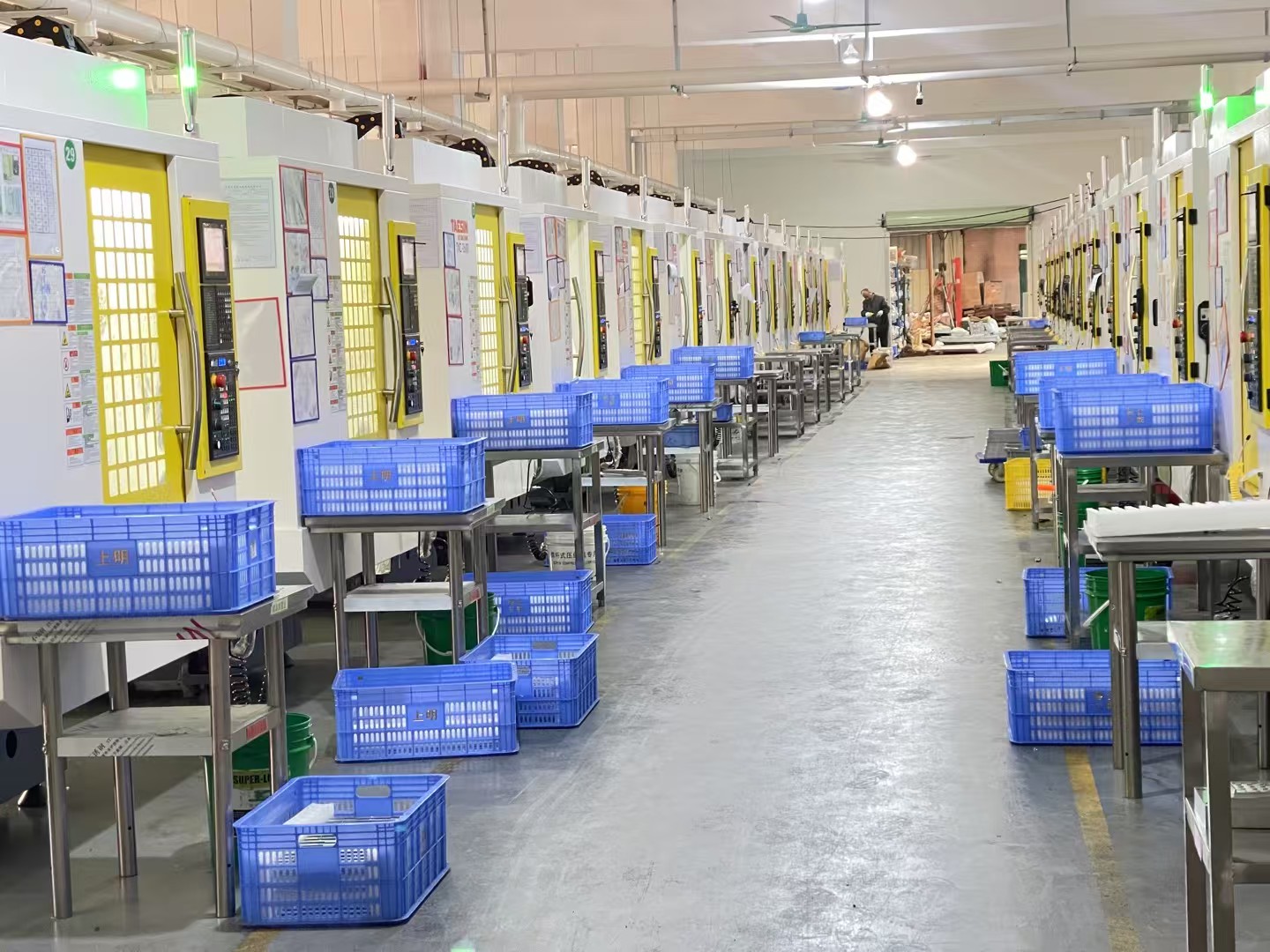
Take two round bars labeled only as 'steel' and you might assume they behave the same under a cutting tool. Swap one for 12L14 and the other for 316 stainless, and the difference shows up within the first few passes. The free-machining 12L14 breaks chips cleanly and keeps tool pressure low, but that sulfur addition also reduces toughness and leaves a surface prone to micro-tearing. The 316 needs slower speeds, sharper edges, and more attention to chip control, yet it survives salt spray and aggressive cleaning agents without pitting. These are not minor process tweaks; they change how you hold tolerances and what the finished part can survive.
Heat treatment makes the split even wider. D2 tool steel grows and distorts enough during quenching that you leave grind stock on every critical surface, then spend extra time on a surface grinder. A precipitation-hardening alloy like 17-4 PH, by contrast, shifts far less during its low-temperature aging cycle, which lets you machine closer to final size before heat treat. Residual stress matters too: a low-alloy steel may creep a few tenths over weeks as stresses relax, while a maraging steel holds dimensions almost indefinitely because its aging temperature stays low and its transformation is more uniform.
Alloy choice also interacts with the rest of the assembly. A 316 stainless shaft inside an aluminum housing expands at a different rate as the temperature climbs, and what fits perfectly at room temperature can seize or wobble at 80°C. Corrosion resistance, fatigue strength, and even how the part responds to passivation or coating all trace back to the specific alloy family. There is no best steel, only the one that matches the thermal, chemical, and mechanical conditions of the job without forcing you to fight the material at every machining step.
Tolerances of ±0.005 mm: A Daily Standard, Not a Marketing Line
The ±0.005 mm tolerance isn't a number we pull out for a one-off demo part or a polished sales brochure. It's the default setting our machinists load on the Haas VF-4SS every Monday at 6:40 a.m. without thinking twice. A batch of 316 stainless steel brackets comes off the fixture, and the first piece off the machine already measures within 0.003 mm on the CMM. No offset tweaking, no warm-up scrap, no silent prayers.
We keep the shop floor at 20.2 °C with a swing of less than half a degree, because thermal expansion alone can eat a 0.005 mm window before lunch. Every spindle runs a Renishaw probe cycle between pallet changes, and a Mitutoyo CMM sits twenty steps from the cell. Operators log measurements every two hours, not because a customer asked for it, but because that's how we catch a 0.002 mm drift before it becomes a 0.006 mm reject. The tolerance isn't a target we chase; it's a boundary we live inside.
When a medical device client asked us to hold ±0.005 mm on a titanium bone plate across a 5,000-part order, nobody in the quoting meeting blinked. The same process that runs daily aluminum housings simply switched materials and speeds. First article inspection passed in under fifteen minutes, and the final lot showed a Cpk of 1.67. That's the real meaning of "daily standard" — not a headline, just a habit.
Inside the Inspection Room: CMM Reports You Can Actually Trust
Walk into any inspection room and you'll see the CMM quietly mapping part geometry while the real story unfolds in the report it prints. A trustworthy CMM report doesn't just list numbers—it carries the conditions under which those numbers were earned. Temperature drift, probe calibration, and even the clamping method all leave fingerprints. If any of those go unrecorded, the dimensional data becomes little more than a guess wearing a lab coat.
The difference between a report you can defend and one you hope nobody reads comes down to setup transparency. A solid report names the datum scheme, shows the probe configuration, and flags any out-of-tolerance feature without burying it in footnotes. It also records the software version and filter settings, because those choices can shift a measured diameter by more than the tolerance band itself. When operators treat the report as a live record rather than a form to be filled, that's when it earns its place in an audit.
Good shops build repeatability into the reporting path. The same program, the same fixture, the same alignment routine—run a week apart, the numbers shouldn't wander. If they do, the report should say so. That kind of honesty, not the polish of the PDF, is what keeps engineering and quality on the same page. It also turns the CMM from a fancy comparator into a tool that actually closes the loop between design intent and what leaves the dock.
Why Low-Volume Precision Runs Are Quietly Reshaping Supply Chains
The old playbook said you needed massive order volumes to keep unit costs down, but that logic is fraying at the edges. Shops running precision parts in batches of ten or fifty are now undercutting the hidden costs of warehousing, obsolescence, and rushed freight. Instead of locking capital in pallets of inventory that might sit for months, companies order small runs as demand firms up, and they get parts that fit the first time.
Shorter runs also collapse the feedback loop between design and production. An engineer can tweak a bracket on Tuesday, have a revised set of parts by Friday, and run functional tests the following week. That pace was unthinkable when a single mold change meant six weeks and a five-figure bill. In sectors like surgical robotics, drones, and custom automation, this ability to iterate without committing to a year's worth of stock is quietly becoming the default way to buy machined components.
The ripple effects go beyond convenience. Low-volume precision work encourages more distributed sourcing, which shortens shipping lanes and reduces the temptation to over-order just to hit a price break. Buyers begin to see responsiveness, not unit price alone, as the real measure of supply chain health. It is a subtle shift, but one that is rewiring procurement habits and giving smaller manufacturers a seat at tables once reserved for high-volume giants.
From Prototype to 10,000 Parts: The Realistic Timeline No One Quotes
Most quotes skip the messy middle. You can print ten prototypes in a weekend, but moving to 10,000 units means tooling, process control, and a supply chain that doesn't buckle at week six. A steel injection mold alone runs four to eight weeks if the design is frozen—yet most teams are still tweaking snap fits and wall thicknesses when the PO is cut.
Then comes the validation gap. First shots off the tool reveal sink marks, warpage, or a resin that shrinks more than the CAD predicted. Each fix adds days, not hours. Realistically, a contract manufacturer will want two to four weeks for a pilot run, another week for measurement and cosmetic sign-off, and a buffer for changing a gate location or polishing a cavity. If you skip that, the 10,000-part order becomes an expensive lesson in scrap rates.
Only after pilot approval does the real ramp begin. Expect two to six weeks for full production depending on cycle time and cavitation, plus another week for packaging and shipping. So the honest timeline from frozen prototype to 10,000 parts on your dock is rarely under ten weeks—and often closer to sixteen. Anyone promising less is quoting the part, not the process.
FAQ
Most shops handle 3-axis and 5-axis milling, CNC turning, grinding, and EDM. Some also offer laser cutting and sheet metal work, so you can often get multiple operations done under one roof.
Reputable suppliers routinely hold tolerances within ±0.005 mm for critical features. The exact capability varies by shop, so it's wise to share your drawing and ask for a capability statement before committing.
Yes, many have experience with stainless steel, titanium, Inconel, aluminum alloys, PEEK, and POM. Just confirm the specific grade you need is in stock or easily sourced to avoid delays.
Expect full dimensional inspection with CMM, surface roughness testing, and material certification. Some factories also provide first article inspection reports and batch samples for approval before full production.
Machining itself is often quick—prototypes can be done in 3 to 7 days. The main variable is shipping, so air freight gets parts to you in about a week, while sea freight takes longer but costs far less per kilogram.
Many shops are set up for exactly that. They will machine one or two test pieces, refine the process with your feedback, and then run larger batches without changing equipment or programmers.
STEP or IGES files are standard, along with a PDF drawing showing tolerances, threads, and surface finish. If you only have a sample part, some suppliers can reverse-engineer it, but that adds time and cost.
Absolutely. A small pilot batch lets you verify fit, finish, and consistency. Most Chinese CNC shops expect this and will adjust pricing or timelines on the full order once the trial is approved.
Conclusion
Uploading a CAD file to a Chinese machine shop kicks off a surprisingly fast and rigorous process. Within hours, an engineer reviews the model for manufacturability, flags undercuts or impossible thin walls, and often suggests tweaks that cut cost without sacrificing function. The shop’s material library matters more than most buyers realize: a request for 'steel' could mean anything from soft 1018 to hardened 4140 or stainless 316, and the wrong alloy choice can warp a precision part during machining or fail in the field. The best suppliers ask about end-use conditions before quoting, not after. That same front-end care extends to tolerances. Holding ±0.005 mm is not a special achievement here; it is the daily default on five-axis mills and Swiss lathes, backed by in-process probing rather than post-hoc hope.
After machining, parts move to the inspection room where CMM reports carry real traceability — serial numbers, measured points, and pass/fail data tied to your drawing revisions. Buyers who once distrusted overseas QC now routinely receive reports they can audit against their own metrology. Low-volume precision runs have quietly become the backbone of many Western supply chains: instead of warehousing thousands of parts, teams order 50 or 200 units, get them in two weeks, and iterate without tooling penalties. The timeline from first prototype to 10,000 parts is often shorter than quoted because Chinese shops run parallel processes — programming while material is cut, finishing while inspection queues — but honest shops still tell you that surface treatments or tight GD&T callouts add days. The real advantage is not cheap labor; it is a culture that treats precision as routine.
Contact Us
Contact Person: Mason Lv
Email: [email protected]
Tel/WhatsApp: +86 13027998452
Website: https://www.peakfastentech.com