
CNC Parts Wholesaler Secrets to Getting High-Quality Components at Scale
2026-09-29
Scaling CNC parts sourcing from a few samples to full production runs is where the real chaos begins. You can find dozens of shops that nail a one-off part, but only a handful can hold tight tolerances across thousands of units without drifting. That gap is exactly what separates profitable wholesalers from those bleeding money on rejects and delays. In this post, we break down the sourcing secrets that keep BOYIKUN ahead of the curve—from supplier vetting to quality triggers most buyers overlook.
What Your CNC Quote Isn't Telling You
Most CNC quotes stop at machine time and raw stock, but the hours spent on programming, fixture design, and setup rarely appear as their own line items. A part that looks straightforward on a sketch can still demand custom soft jaws or a second operation, and that cost gets folded into the price—or worse, added later as a change order once you’re already locked in.
Tolerances tell the same quiet story. A drawing might call out ±0.005 inches, but holding that across a curved wall or deep pocket is nothing like holding it on a flat edge. Some shops price for the best-case run and then bill for the extra probing, slower feeds, and scrapped test pieces. Others pad the quote from the start because they know the real difficulty. Either way, the number you see rarely reflects the one you pay.
Then there are the finishing touches that don’t make the spreadsheet. Deburring, edge breaks, light bead blasting, inspection reports, and even the foam that keeps parts from clanking in the box can turn a twelve-dollar bracket into a forty-dollar headache. If the quote doesn’t spell out surface finish or post-processing, assume those steps are missing—or waiting for you at your own bench.
The Tolerance Fine Print Most Buyers Skip
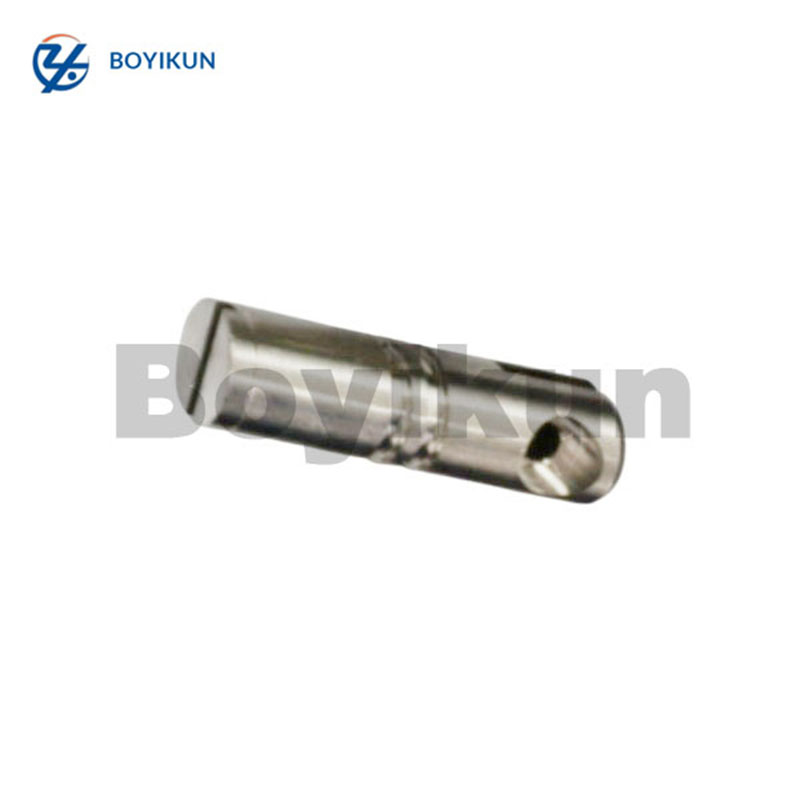
Hidden in the notes section of a spec sheet, tolerance callouts often get a quick glance before the order is placed. Many buyers assume standard manufacturing precision will handle the rest. But a missing decimal place or a vague “±” can shift a part from functional to scrap without anyone noticing until the invoice is already paid.
The real issue is not the numbers themselves but where they apply. A tight tolerance on a non-critical surface adds cost without adding value. Meanwhile, a loose callout on a mating feature can lead to assembly gaps, misalignment, or premature wear. Buyers who skip this section end up approving drawings that look fine on screen but fail on the shop floor.
In practice, the smarter approach is to question every tolerance that feels inherited from a previous revision or copied from a similar part. If the design intent is unclear, ask the supplier or engineer to walk through the function of each controlled dimension. That extra conversation costs far less than a batch of parts that meet the print but miss the point.
How to Vet a Machine Shop Without Setting Foot Inside
Start by pulling the shop's certifications and quality docs. Ask for AS9100 or ISO 9001 certificates, material certs, and any first article inspection reports they can share. A shop that hesitates to send these or makes you chase them is a red flag. Cross-check the cert numbers with the issuing body—many are easy to verify online. Also look at their equipment list. If they claim tight tolerances but only list aging manual machines, that mismatch tells you a lot.
Schedule a live video walkthrough. Ask them to show the actual machines, the inspection room, and how they handle in-process checks. Watch the background: organized tooling, clean floors, and a CMM that's actually running are better signals than a polished website. Ask to see a job similar to yours being set up. If they refuse or keep pointing the camera at marketing posters, move on.
Request a sample or a small trial order before committing to production. Send a drawing with a few tight dimensions and see how they quote, communicate, and deliver. Check the sample with an independent lab or your own inspection. Also ask for references from customers with similar parts, then call them and ask about delivery times, rejected lots, and how problems were handled. Those conversations reveal more than any brochure.
Material Certifications That Separate Pros from Pretenders
Any contractor can drop the acronym FSC or GREENGUARD into a sales pitch. The pros, however, can tell you exactly what those marks test, what they don't cover, and when a cheaper certified alternative is actually the better call. Ask a pretender to explain the difference between CARB Phase 2 and TSCA Title VI for composite wood, and you'll get a blank stare. Ask a pro, and you'll get a breakdown of formaldehyde emission limits, testing chamber sizes, and why one applies to raw panels while the other to finished goods.
There's a growing graveyard of meaningless certifications, many of them self-awarded or paid-for logos that imply safety without any third-party verification. A seasoned professional knows which certs carry real enforcement and which are just marketing. For instance, a 'non-toxic' paint label tells you nothing, but a Green Seal or MPI certification comes with publicly available test results, ongoing audits, and a published list of approved products. Pros also know that certifications expire and that a product's status can change year to year, so they check the current registry rather than relying on a brochure printed three years ago.
The final tell is documentation. A genuine expert will pull chain-of-custody records, batch numbers, and lab reports before the material even arrives on site. They understand that a certification is a snapshot, not a permanent guarantee, and they verify that the delivered product matches the certified one. Pretenders wave a PDF logo and call it done. If you're sourcing for a healthcare project, a pro will ask for the specific VOC emission test report from the same production run as your order—not just a generic certificate from the manufacturer's website.
Keeping Quality Consistent When Volumes Spike
A sudden order surge doesn’t announce itself with a warning label. It shows up as a Friday afternoon spreadsheet, a sold-out SKU, or a warehouse floor buried in returns. The first casualty isn’t always throughput—it’s the quiet calibration work that keeps defects from reaching customers.
When demand doubles, doubling inspections rarely doubles safety. Instead, you need pre-set control limits that trigger action before a line goes out of spec. Think torque settings on packaging, fill weights on liquids, or stitch density on textiles—each one should have a red line that stops production, not just flags it after the fact.
Volume spikes often mean temporary labor. Keeping quality steady means giving those workers a stripped-down, visual standard—one page, no jargon—so they can self-check without pulling a supervisor off the floor. Pair that with a short daily huddle where the previous shift’s near-misses are named out loud, and you close the loop before the next batch hits the dock.
The Lead Time Conversation That Saves Your Production Schedule
Most production delays don't start on the factory floor. They start weeks earlier, in a meeting room where someone says, "We'll have the materials by the 15th," and nobody asks what happens if the shipment gets held up in customs. That's where the lead time conversation comes in—not as a routine status update, but as a deliberate, pressure-testing dialogue about every link in the supply chain. When you sit down with suppliers and ask them to walk you through their own constraints, you quickly learn that a promised four-week lead time often hides fragile assumptions: a single machine that could break down, a sub-tier supplier working at capacity, a holiday schedule nobody accounted for. By forcing those details into the open, you stop treating lead times as fixed numbers and start treating them as variables you can shape.
The real value of this conversation isn't just identifying risks—it's creating a shared buffer that everyone agrees to protect. Instead of padding your own schedule secretly, you ask the supplier what would make them comfortable committing to a shorter window. Maybe it's a rolling forecast that gives them visibility into your next three orders. Maybe it's agreeing to pay a small premium for reserved capacity during your peak season. Whatever the lever, the point is to turn a one-way demand into a two-way negotiation. One plant manager I know reduced a critical component's lead time from six weeks to three simply by offering to pick up the parts from the supplier's loading dock twice a week instead of waiting for their standard courier. The conversation revealed that half the delay was pure logistics, not production.
Finally, don't let this be a one-time talk. Lead times drift as demand shifts, labor markets tighten, and shipping routes change. A monthly fifteen-minute call with each key supplier—where you review actual versus promised dates and flag any upcoming bottlenecks—keeps the schedule honest. When a delay does happen, you'll hear about it early enough to adjust downstream operations, rather than discovering it when the assembly line goes quiet. That early warning is what saves the production schedule, not some heroic last-minute scramble.
FAQ
Look beyond their machine list. A volume-ready shop will have redundant capacity, meaning at least two machines that can run your part family, plus documented setup sheets so a new operator can repeat the job without dialing in everything from scratch. Ask how they handle tool wear across a 5,000-piece run and whether they use in-process probing to catch drift before it becomes scrap. If they talk only about spindle speed and not about process control, keep looking.
Because the first article gets all the attention while production relies on assumptions. A good shop will freeze the process after approval, not just the drawing. That means the same coolant concentration, the same tool brands, the same fixture offsets, and a boundary sample for surface finish. Without that, every new operator on second shift becomes a lottery ticket. You want proof they can hold the process, not just make the part once.
Don't start with price, start with waste. Ask the shop to walk you through their cycle time and setup time breakdown. Often there are opportunities like combining ops, reducing unnecessary deburring, or switching to a near-net material that save money without touching tolerances. If you just demand a 20% cut, they'll find it by using cheaper material or skipping final inspection. The secret is to make the quote transparent so both sides are cutting cost, not corners.
It's not about the bracket, it's about what happens when one bracket fails in the field. If you can't trace that part back to a heat lot, you might have to recall every bracket you've sold for six months instead of the 300 pieces from that specific bar. Material certs also prevent a sneaky swap from 6061-T6 to a cheaper 6061-T6511 with different machinability. For high-volume commodity parts, traceability is cheap insurance against an expensive story.
Single sourcing gives you leverage on pricing and communication, but you need a second source that's pre-approved and running one or two parts regularly. That way if your primary shop has a fire, a flood, or a key machinist quits, you're not starting from zero. The risk isn't having one main supplier, it's having no plan when that supplier goes down. Dual-source a handful of parts, not everything, and keep the secondary warm.
True position callouts on hole patterns, especially when they're tighter than the mating hardware needs. Many drawings inherit ±0.001 on everything from a legacy design, but the assembly only cares about a few features. A good shop will push back with a DFM note and ask which tolerances actually affect function. Loosening non-critical dims from ±0.001 to ±0.005 can drop the price by 30% or more because the machine doesn't have to creep through every pass, and you still get a part that works.
You can't rely on someone's eye. Ask for a finish standard like a comparator plate or a designated sample that stays at the machine. The shop should also document the exact toolpath, stepover, and tool change interval that produces that finish. If they use an automated deburring process, even better. Visual consistency comes from locking the variables, not from telling the night shift to 'make it look nice.'
Conclusion
Most buyers treat a CNC quote as a fixed promise, but the real story hides in what isn't listed. Shop rates, setup fees, and tooling wear get buried in line items you barely glance at, while the tolerance callouts—often squeezed into a footnote—determine whether your parts actually fit together. Reading that fine print isn't optional; it's the difference between a bargain and a costly rework. And you don't need a plane ticket to size up a machine shop. Ask for their inspection reports, probe about how they handle tight GD&T callouts, and watch how quickly they share material certs. Mills that hesitate on traceability or can't name their steel supplier are already telling you everything.
Scaling from prototype to production is where consistency either holds or falls apart. Shops that keep quality steady during volume spikes usually have documented process controls, not just a confident sales guy. Press them on how they manage tool wear across a 5,000-piece run, and whether their CMM data gets spot-checked or logged for every batch. The lead time conversation matters just as much: a supplier who promises fast turnaround without asking about your assembly schedule isn't planning for your success. The ones worth keeping will map out raw material lead times, machine availability, and inspection queues before committing to a date. That level of transparency is rarer than it should be.
Contact Us
Contact Person: Xianchen Hu
Email: [email protected]
Tel/WhatsApp: 86-13248645200
Website: https://www.hexnb.com/