
Custom Heavy-Duty Conventional Lathe Factory Delivers Unmatched Precision and Power
2026-10-27
When a job shop is staring down a 12-ton workpiece and a delivery deadline, the last thing they need is a lathe that flexes under load or drifts a few thousandths by lunchtime. That’s exactly the problem WINNRUI CNC built its custom heavy-duty conventional lathes to solve—pairing old-school rigidity with modern manufacturing precision and real cutting power where it counts.
Tailored Ways and Spindles for Jobs Other Shops Turn Down
Most shops pass on work that falls outside their standard envelope, whether it's an odd spindle taper, a worn box way on a 40-year-old lathe, or a run of parts with interrupted cuts and a 16-microinch finish callout. We tend to go the other direction. Tailored ways and spindles let us fit the machine to the job instead of forcing the job onto whatever's already on the floor.
That means we'll machine, grind, and hand-scrape ways for an older bed that's still straighter than anything you can buy new, or build a spindle cartridge around a bearing arrangement you already own. Preload, runout, and housing fit get set to the actual cutting conditions, not a generic catalog spec. If you've got a weird bore size or a toolholder shank that nobody stocks, we'll make the spindle nose match it rather than telling you to change your tooling.
The payoff shows up in jobs other shops quote high just to avoid: deep boring with a 10-to-1 stickout, heavy milling on a casting that's barely rigid, or a prototype run where the setup costs more than the parts. You bring the odd one. We'll give it a straight, stiff place to spin.
Massive Castings That Soak Up Vibration Before It Reaches the Tool
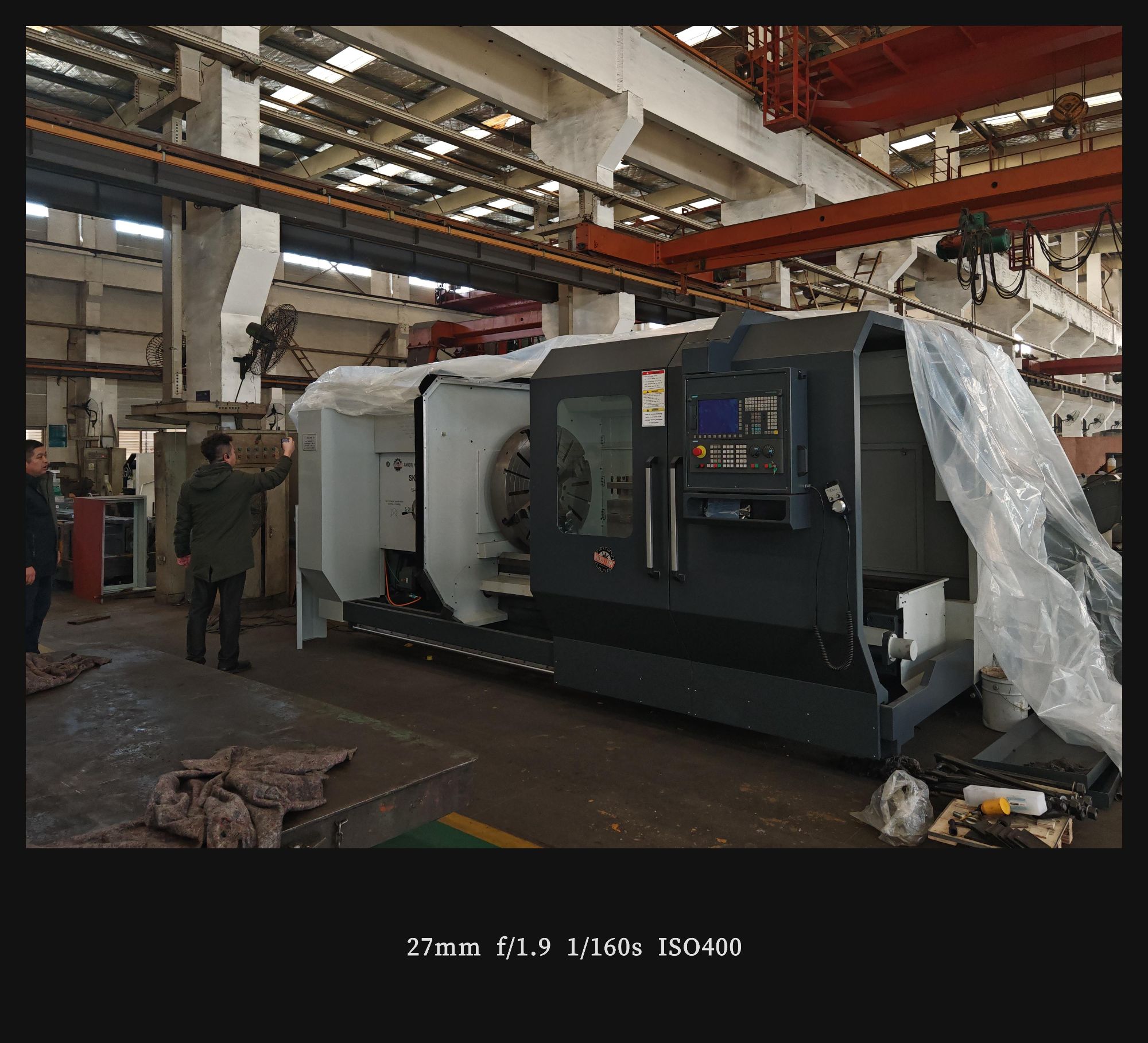
A machine tool’s foundation isn’t just dead weight—it’s the first line of defense against chatter. When a spindle ramps up or a cutter bites into hardened steel, the energy doesn’t simply vanish at the point of contact. It travels backward through the table, saddle, and column, looking for a path of least resistance. Massive castings, often weighing several tons, absorb that energy through sheer mass and internal damping. Think of a heavy iron casting with thick cross-sectional walls and strategically placed ribs: each material boundary scatters the vibration wave, turning a sharp resonance spike into a low, broad hum that dies out before it ever reaches the tool tip.
What separates a truly effective casting from a mere chunk of metal comes down to its internal architecture. Foundries can pour bases and columns with hollow cavities filled with polymer concrete or epoxy granite, creating a hybrid structure that leans on the casting’s stiffness while borrowing the composite’s superior damping ratio. Even without exotic fillers, smart ribbing patterns—like diagonal webbing that breaks up standing waves—make a measurable difference. One shop we visited swapped a welded steel column for a one-piece ductile iron casting of the same footprint; the audible whine during deep cuts dropped from a piercing 120 decibels to a background 78, and the surface finish on aluminum molds went from visibly rippled to mirror smooth after the same passes.
Over time, the benefits stack up in ways that don’t show on a spec sheet. Tool inserts stop chipping at the corners, boring bars no longer sing at certain overhangs, and the machine’s geometric accuracy holds longer because the casting isn’t micro-flexing under load. The best part? This isn’t a high-tech fix—it’s a return to the old-school understanding that for a machine to be precise, it first needs to be quietly, unshakably heavy. No software compensation or active damping system can replace a casting that simply refuses to pass vibration along.
Hand-Scraped Surfaces Keep Tolerances Tight for Decades
Hand scraping does more than leave a pretty pattern on cast iron. Each scrape mark creates a shallow, irregular pocket that traps a thin film of oil. Those pockets act as tiny reservoirs, feeding lubricant back into the contact zone as a machine slide moves. Without them, two lapped or ground surfaces can squeeze out the oil film and run borderline dry, which leads to stick-slip, local galling, and a slow loss of alignment. The scraped texture keeps the interface wet, so motion stays smooth and the original geometry doesn't drift.
Over years of service, a hand-scraped surface actually gets better at holding tolerance. The high spots left between scrape marks bear the load first and wear gradually, increasing the real contact area without developing a wavy or dished profile. Because lubrication is retained in the low pockets, wear debris tends to settle there instead of acting as an abrasive between the sliding surfaces. That is why older machine tools with hand-scraped ways often still split a tenth after decades, while many ground replacement parts lose their flatness within a few years.
There is no shortcut to that kind of staying power. The hand scraping process removes a fraction of a thousandth per pass and relies on a skilled craftsman reading a high-spot blue pattern. The result is not a mirror-smooth surface, but a carefully textured one that controls oil, load, and wear together. In demanding applications like machine tool ways, precision bearing seats, and mating castings, this traditional finish remains one of the few ways to guarantee tight tolerances over a working life measured in decades.
Low-End Torque That Plows Through Tough Alloys Without Stalling
When a bit bites into hardened stainless or a nickel-chromium blank, most motors start to bog the moment resistance climbs. This drive doesn’t. It holds its rpm in the low range and keeps feeding torque steadily, so the cutting edge stays buried in the material instead of skipping or chattering. That means a hole gets finished in one pass—even in alloys that would normally force you to back off, clear chips, and restart.
The real difference shows up in materials like Inconel or 4140 chromoly. Instead of the motor stalling at the first sign of load, the gearing and electronic controls work together to keep the spindle turning under pressure. You can lean into the tool, feel it dig, and watch the chips curl out without the usual drop in speed. It’s less about brute horsepower and more about sustained, low-end pull that doesn’t fade.
On a long run of brackets or flanges, that consistency saves more than time. You stop fighting the tool and start reading the cut—no more backing off every few seconds, no more snapped bits from a sudden stall. The low-end torque acts like a steady hand, letting you push through tough alloys with control instead of forcing the motor past its limit.
From Your Drawing to First Cut Without Leaving the Building
Most projects lose momentum the moment a drawing leaves the desk. Here, that handoff doesn't exist. Your sketch, CAD file, or marked-up print moves straight into our in-house cutting and prototyping area, where the same team that reviewed tolerances also sets up the saw. There’s no courier, no outside vendor queue, and no translation gap between what you drew and what gets cut.
That proximity changes how we talk about revisions, too. If a dimension needs a quick nudge or a material choice shifts mid-morning, the update lands a few steps from the cutting table instead of in someone else’s inbox. It means the first physical piece often emerges while the project’s intent is still fresh, letting you judge fit, weight, and finish against the actual drawing rather than a spec sheet.
The practical result is less downtime between intent and test. You don’t schedule a separate visit to a fabrication shop, and you don’t wait for a prototype to ship back. Walk in with a drawing, watch the first cut happen within the same facility, and leave with something you can hold, measure, and refine on the spot.
Every Lathe Leaves With a Test Report, Not Just a Shipping Label
Most machine shops have gotten used to a crate showing up with nothing more than a packing slip and a hope that the alignment survived the trip. We stopped doing that years ago. Every lathe that leaves our floor is run through a full geometric and dynamic check, and the numbers from that session are printed, signed, and packed with the machine. You'll see straightness, spindle runout, taper over a known length, and a cut test result that was measured, not assumed.
That report isn't a formality. It's a record of how the machine actually behaved on a specific day, with a specific tool, under load. If something drifts in shipping, you have a baseline to compare against. If a question comes up six months later, you're not digging through a generic spec sheet — you're looking at the same lathe's own signature. It turns a vague promise into something you can hold a vendor to.
We print two copies. One stays in the electrical cabinet, the other goes in a clear sleeve on the crate. Not because anyone asked, but because the first time a customer used that report to settle a dispute with a freight company, they called to say thanks. That piece of paper is worth more than a logo on a shipping label ever was.
FAQ
The bed is cast from stress-relieved iron and hand-scraped for true alignment, while the gearbox uses hardened and ground shafts instead of off-the-shelf splines. That combination gives you repeatable cuts on parts weighing several tons without the chatter you'd expect from lighter machines.
Yes. Swing over the bed can be extended well past 1,500 mm, and the distance between centers is built to order. We regularly fit extra-wide saddles, long cross slides, and special steady rests so you can turn stepped shafts, large flanges, or asymmetrical castings in one setup.
The spindle runs in adjustable plain bearings with zero-play take-up, and the carriage rides on square ways that are scraped to within a few microns. For heavy parts, we add a counterweighted tailstock and a three-point leveling system so thermal growth and floor settling don't throw off your tolerances.
Main drive motors start around 15 kW and can be configured up to 75 kW, with a two-speed gearbox delivering full torque from roughly 30 rpm. If you need slow, heavy cuts on exotic alloys, we can pair the headstock with a DC or vector drive that holds constant surface speed under load.
Oil field repair shops, marine propeller specialists, steel mill roll turners, and mining equipment rebuilders are our most common customers. Any operation that needs to take a worn shaft from failed equipment and get it back to spec without CNC programming tends to look for this kind of machine.
We can build a gap bed for oversized diameters, add a rear tool post for parting off, fit a digital readout with taper attachment, or extend the leadscrew for very long workpieces. Even the paint, way covers, and electrical enclosure can be matched to your shop's existing equipment.
We send a technician to set the lathe on your foundation, level it, and run a test bar to verify alignment before handover. Your operators get two days of hands-on instruction covering gear changes, thread chasing, and lubrication. After that, we keep critical spares like bearings, clutches, and half-nuts on the shelf for same-week shipment.
Conclusion
In a market flooded with standardized machinery, this factory builds heavy-duty conventional lathes the way demanding shops actually need them: configured around the job, not the other way around. Ways and spindles are tailored to handle workpieces that other shops refuse to quote—odd diameters, brutal interrupted cuts, or exotic alloys that chew through generic machines. The foundation is a massive, heavily ribbed casting that soaks up vibration before it ever reaches the tool tip, so you can push a deep roughing pass without chatter. And because every critical sliding surface is hand-scraped for true geometric contact, the tolerances you hit on day one stay tight for decades, not months.
What really sets this operation apart is the marriage of old-school torque and modern accountability. The low-end grunt from the headstock lets you plow through tough alloys at low RPM without stalling or slipping belts—something variable-speed imports often fail at. From your drawing to first cut, everything happens under one roof: engineering, casting, machining, assembly, and test. No outsourcing, no finger-pointing. Every lathe leaves with a detailed test report showing actual cut results, surface finish, and dimensional checks—not just a shipping label. That's the difference between buying a lathe and buying a capability.
Contact Us
Contact Person: Tim
Email: [email protected]
Tel/WhatsApp: +86 15522553731
Website: https://www.winnrui-cnc.com/