
Reliable Labels Inkjet Coding Machine for Consistent Industrial Printing
2026-11-02
Every unreadable code on a production line costs more than you think. When batch numbers, expiry dates, or barcodes fade or smudge, the entire supply chain stumbles. That’s where Danmajet steps in—with inkjet coding machines built for one thing: consistent, reliable printing that keeps your operation moving. In this post, we’ll explore what makes these machines different and why uptime matters just as much as print quality.
Ink drops land precisely where they should, label after label
The printhead glides across the substrate with a quiet assurance, each micro-droplet settling into its assigned position without a hint of drift. There is no visible correction, no stutter in the rhythm — just a continuous stream of placement so exact that you forget the mechanics behind it. Watch a run of five hundred labels, and you'll see the same crisp edge, the same clean dot matrix, the same unwavering registration from first piece to last.
This kind of repeatability doesn't come from luck or a single calibration pass. It's built into the way the ink is delivered — a closed-loop system constantly checking its own output, adjusting for viscosity shifts and nozzle temperature in real time. The result is a consistency that feels almost organic, as if the machine has learned the surface it's printing on and refuses to compromise.
And because each drop lands where it should, the labels themselves carry a visual weight that feels deliberate. No faint ghosts of misplaced ink, no bleeding edges that need to be explained away. Just clean, purposeful marks that hold up under close inspection — label after label, hour after hour.
Dust, heat, and vibration don't slow this printer down
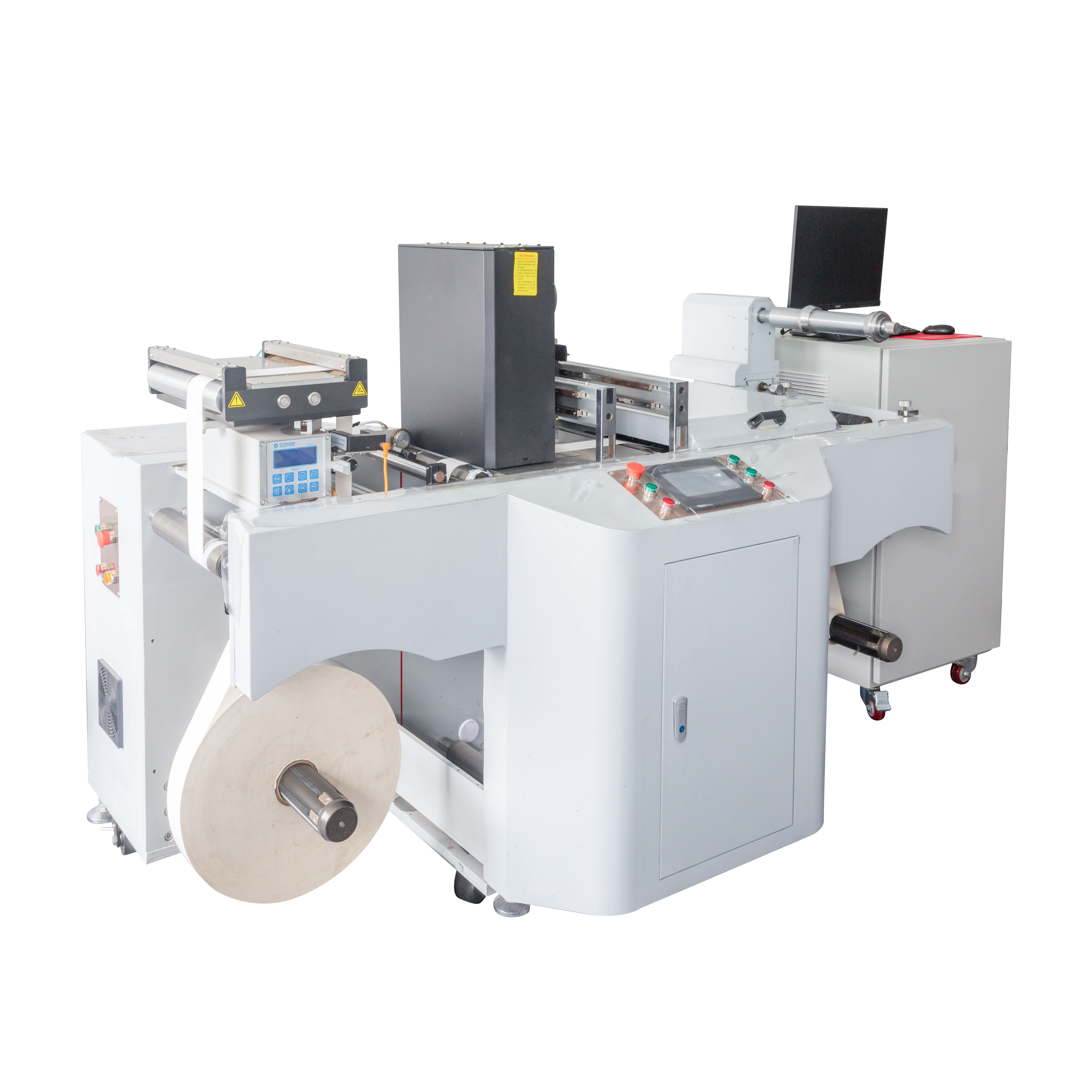
On a factory floor or inside a dusty warehouse, most printers start to wheeze after a few weeks. This one doesn't. The chassis is sealed tight enough to keep fine particles out of the paper path and print head, so you're not constantly wiping down rollers or clearing jammed debris.
High ambient temperatures cause lesser machines to drop print quality or shut down entirely. Here, internal components are spaced for airflow and the power supply stays cool even during long runs. The housing resists warping, and the print engine keeps a steady pace without thermal throttling.
Vibration from nearby conveyors, forklifts, or heavy equipment tends to blur output on ordinary printers. This unit uses dampened mounting points and a rigid frame to hold alignment. The result is sharp text and scannable barcodes, even when the shelf it sits on is shaking.
Sticks to glossy film, cardboard, and everything in between
Whether you're sealing a shiny poly mailer or reinforcing a corrugated box, this adhesive grabs on fast and holds without sliding. The formulation is tuned for surfaces that normally shrug off standard tapes, so the glossy coating on film won't cause peeling or lifting at the edges.
Cardboard's porous texture gets a deep, even bond rather than a superficial tack. You'll notice the difference when you run a finger along the seam—nothing shifts, no air bubbles form under the surface.
That middle ground matters too: lightly waxed cartons, kraft envelopes, chipboard, even the occasional plastic folder. One roll covers the range, which means fewer swaps and less guesswork when you're packing mixed shipments.
Change cartridges in seconds, not minutes
Most cartridge swaps eat up five or ten minutes—dig out the manual, pry out the old unit, then clean up the spill. This one drops the old cartridge with a single press and locks the new one in with a short twist. No tools, no guesswork, no residue on your hands.
That speed changes how you work. Swap cartridges mid-project without losing your place, refill right before a long run, or switch between types on the fly. The cartridge seats itself with a firm click, so there’s nothing to force or recheck.
Full production speed with none of the smudging
Printing at full production speed usually means accepting a trade-off: smeared edges, faint lines, or ink that never quite dries before the next sheet lands on top. This system refuses that compromise. The drying mechanism is engineered to keep pace with the fastest output settings, so every page emerges clean and crisp, even when you are running a ten-thousand-sheet job overnight. There is no need to slow down the line or babysit the tray—just set the speed and let the device handle the rest.
What makes the difference is not a single breakthrough but a combination of controlled airflow, precise heat distribution, and an ink formula that bonds almost instantly on contact. While other machines struggle with glossy stock or heavy coverage areas, this one maintains edge definition across the entire sheet. You can print full-bleed marketing materials, dense charts, or double-sided reports back-to-back without seeing ghosting or offset marks on the next page.
In short, you get the throughput you were promised and the print quality you actually want. No smudging, no waiting, no reprints. Just a smooth run from first page to last, even when your deadlines are measured in minutes rather than hours.
Drops into your line without a major retrofit
Most upgrades demand downtime, rewiring, and a forklift's worth of new machinery. This one doesn't. It's engineered to slide into the same mounting points and electrical hookups you already have, so your current line keeps its rhythm. The footprint is nearly identical to the unit it replaces, only the throughput changes.
There's no need to redraw plant layouts or fight for extra floor space. A standard shift can pull the old module, bolt this in, and be back to full production before lunch. The control interface stays familiar, so operators aren't relearning their own workflow. That's the whole point: better performance shouldn't come with a construction project.
If your line was built to run, not to be rebuilt, this fits that philosophy. You're back online faster, with fewer labor hours and no pile of obsolete fixtures waiting for scrap.
FAQ
It's built for high-volume packaging lines in food and beverage, pharmaceuticals, cosmetics, and electronics. The printhead tolerates dust, vibration, and rapid product flow, so it doesn't stall when things get messy.
The closed-loop ink system keeps viscosity and pressure stable, and the automatic nozzle cleaning cycle kicks in between runs. That prevents fading or missing codes even after eight hours of continuous marking.
Not really. Operators can load preset templates from the touchscreen and adjust variable data like dates, batch numbers, or barcodes without stopping the line. Changeovers usually take under a minute.
Mostly wiping the printhead and checking ink levels. The modular design lets you swap the ink cartridge and filter in seconds, and there's no need for special tools or a technician for routine upkeep.
Yes. With the right ink cartridge, it marks coated paper, foil, film, and even some plastics without smearing or poor adhesion. The machine automatically adjusts droplet size for the substrate.
Inkjet coding is gentler on heat-sensitive labels and costs less upfront. Lasers can burn through thin films or change the label's appearance, while this printer gives a clean, high-contrast code without damaging packaging.
It means fewer unplanned stops. The IP-rated housing protects internal parts from dust and washdowns, the ink pump is rated for continuous duty, and the manufacturer provides remote diagnostics to fix minor issues before they cause downtime.
Conclusion
The Reliable Labels inkjet coding machine earns its name on the line, where precision isn't a one-off event. Ink drops land exactly where they should, label after label, so every code, date, or barcode lines up without drift. That consistency holds even when the environment pushes back. Dust, heat, and vibration barely register—this printer keeps laying down clean marks while other equipment stutters. At full production speed, there's none of the smudging that usually forces slower runs or extra drying time. The result is a readable, durable code on every pass, without constant adjustment or rework.
Material changes don't slow things down either. The ink adheres to glossy film, cardboard, and everything in between, so one machine handles the variety most packaging lines deal with daily. When a cartridge runs dry, the swap takes seconds, not minutes—no tools, no mess, no extended downtime. And integration is just as painless. The unit drops into your existing line without a major retrofit, connecting to current conveyors and controls with minimal fuss. That combination of quick changeovers, broad substrate compatibility, and simple installation makes it a practical workhorse for consistent industrial printing.
Contact Us
Contact Person: Jacky
Email: [email protected]
Tel/WhatsApp: 086 15000607053
Website: https://www.danmajet.com