

Stainless Steel D Shackle Wholesaler: What to Know Before Buying in Bulk
2026-10-17
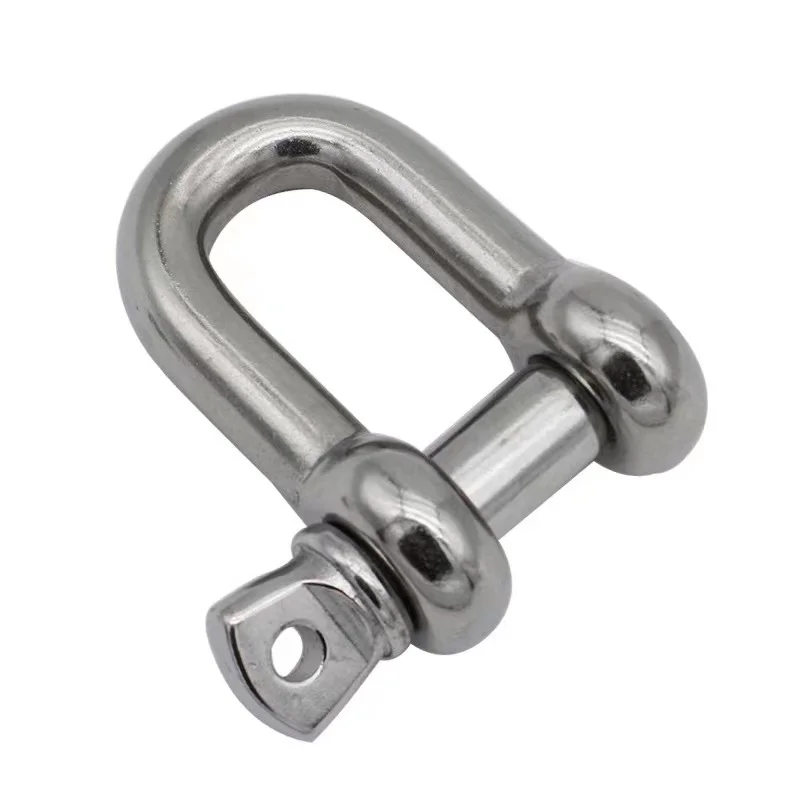
When sourcing stainless steel D shackles in bulk, the difference between a smooth supply chain and a costly headache often comes down to details that many buyers overlook. From load ratings and forging standards to finish quality, every specification matters once these components hit real-world rigging. As a trusted wholesaler, Wanluo has seen procurement teams learn these lessons the hard way. This guide breaks down what actually separates reliable bulk shackles from the ones that fail inspection—and what to check before you commit to a large order.
Not All Stainless Steel Is Created Equal
Walk into any restaurant supply store and you'll see rows of gleaming pots and pans, all labeled "stainless steel." But pick up two pieces that look nearly identical and you might notice one feels heavier, cools down differently, or browns food more evenly. That's because the term "stainless steel" covers a surprisingly wide family of alloys, each with its own balance of chromium, nickel, and other metals. A cheap 18/0 sheet pan and an 18/10 sauté pan may share a name, but they behave nothing alike in a real kitchen.
The numbers stamped on the bottom—when they're actually stamped—tell only part of the story. 18/10 refers to the percentage of chromium and nickel, but it says nothing about the thickness of the metal, the quality of the core, or whether the pan is fully clad or just has a disc fused to the base. A thin disc-bottom pot will scorch sauces at the edges while a fully clad tri-ply pan spreads heat up the sides. Home cooks often blame their technique when the real culprit is a stainless blend that was never designed for high-heat searing or delicate reductions.
Even among high-end brands, the finish and grain of the steel matter. Some are polished to a mirror shine that resists staining but shows every fingerprint. Others have a brushed or matte surface that hides scratches but can hold onto oil. Then there's the question of magnetic compatibility: if you cook on induction, you'll need a magnetic grade of stainless on the exterior, which rules out many otherwise excellent all-clad designs. Knowing these differences isn't about chasing specs—it's about matching the tool to the way you actually cook, not the way the marketing photos suggest you should.
Load Ratings: The Numbers That Actually Matter
Load ratings aren't a suggestion printed for legal reasons—they're the difference between a tire that holds its shape under a fully loaded vehicle and one that overheats, delaminates, or blows out on a long grade. The number you see on the sidewall corresponds to a specific weight capacity at a given pressure, and that mapping is far less forgiving than most drivers assume.
A common mistake is matching the tire size and speed rating while ignoring the load index. Two tires can look identical in diameter and width, yet one might be rated for 1,200 pounds per corner while the other tops out at 1,600. If you tow, haul, or frequently drive with a full cabin, that 400-pound difference per tire adds up to over a ton of extra margin—or a dangerous deficit.
Here's the practical rule: check the load index on your current tires before replacing them, and never downgrade. If you've added heavier accessories, a roof tent, or upgraded suspension for overlanding, you likely need a higher load rating than the factory spec. The number itself is small, but the consequences of ignoring it are not.
Spotting Manufacturing Shortcuts Before They Break
A batch of circuit boards passes every automated test, yet three months later field failures spike. The culprit often hides in plain sight: thinner copper traces than specified, a cheaper solder alloy, or a skipped thermal cycling step that only shows up under real-world stress. Catching these shortcuts early means comparing incoming material certificates against physical measurements, not trusting the paperwork. Run a quick cross-section on a sample from each new supplier lot and look for telltale signs like uneven plating thickness or voids in solder joints before they become warranty claims.
One practical approach is to build a short-run torture test into your receiving inspection. Instead of relying solely on the supplier's word, subject a handful of units to rapid temperature swings, vibration, or overvoltage conditions that mimic months of use in a few hours. A legitimate manufacturer will have already done this internally, so their parts should survive without drift. If a connector loosens or a capacitor bulges during your in-house screening, that's your early warning that corners were cut somewhere upstream.
Also pay attention to subtle process changes that don't show up on a standard datasheet. A vendor might quietly switch from a CNC-machined housing to a die-cast alternative, or reduce the number of conformal coating layers from three to two. Ask for revision-controlled process documentation and occasionally audit the line yourself. When a supplier gets defensive about a routine process question, treat that defensiveness as a data point—it often signals a shortcut they'd rather not explain.
The Hidden Costs of Cheap Bulk Shackles
When you see a pallet of shackles priced at half the going rate, the instinct to save money is understandable. But that upfront discount rarely survives contact with a real job site. Low-cost bulk shackles often come from foundries that cut corners on heat treatment, leaving the metal brittle or unevenly hardened. A shackle that fails a pull test after three lifts isn’t a bargain—it’s a liability. The replacement costs alone eat into whatever margin you thought you were protecting, and that’s before anyone mentions the downtime while a crane sits idle.
Then there’s the corrosion story. Cheap shackles frequently skip proper galvanizing or powder coating, relying on a thin zinc wash that disappears after a few months outdoors. Once rust starts inside the pin bore, the working load limit becomes a guess. You end up retiring shackles twice as fast, which means you buy twice as many—and now the “cheap” option costs more per cycle than the quality one. Worse, the surface roughness on poorly machined threads invites galling, so pins seize up and need to be cut off after minimal use.
Don’t overlook the hidden cost of distrust. When riggers can’t read a batch number or don’t know if a shackle was proof-tested, they do what any sensible person does: they grab a bigger one or double up. That slows every lift and adds handling time. And if a failure ever shows up in an incident report, the missing traceability turns an awkward conversation into a legal one. The real price of a cheap bulk shackle isn’t on the invoice. It’s in the inspections you fail, the replacements you buy early, and the sleep you lose wondering what else might let go.
Supplier Questions That Separate Pros from Amateurs
Most buyers ask about lead times and pricing, then call it a day. But the questions that actually expose a supplier's depth are the ones nobody puts on a standard RFQ. Try asking how they sequence their own raw material purchases when commodity prices swing. An amateur will give you a vague promise about “monitoring the market.” A pro will pull up a hedging schedule and show you the exact trigger points where they lock in pricing.
Another gap appears when you dig into how they classify non-conforming parts. If the answer stops at “we have a quarantine area,” you're dealing with a novice. Seasoned suppliers can walk you through their deviation request process, how engineering sign-off happens within hours instead of days, and what percentage of their monthly output falls into concession versus scrap. That level of granularity tells you whether their quality system is alive or just a binder on a shelf.
The sharpest question, though, is about their second-tier suppliers. Ask who supplies their critical subcomponents and how often they audit those sources. Amateurs get defensive or claim it's confidential. Professionals will gladly share a tier-two risk map, show you where single points of failure exist, and explain the dual-sourcing strategy for their top five bottleneck parts. That one conversation separates someone who runs a factory from someone who merely ships boxes.
What Long-Term Buyers Demand Before Reordering
Seasoned procurement teams rarely reorder on a handshake. Before placing the next purchase order, they push suppliers for documented batch-level consistency—not just a certificate, but actual variance data across the last three production runs. If a supplier hesitates to share that, it usually signals instability upstream.
Beyond the spec sheet, long-term buyers scrutinize whether the vendor can hold pricing and lead times under volume swings. They want to know what happens when demand jumps 30% mid-quarter or a raw material shortage hits. A supplier that only performs well in calm conditions is a liability, not an asset.
Communication cadence matters more than most sellers realize. Buyers reorder with partners who flag problems before they become delivery failures and who send proactive updates about production milestones, not just invoices. If the only time they hear from you is when money is due, the reorder decision gets harder every cycle.
FAQ
A true wholesaler will be able to show you mill certificates for the steel, discuss heat numbers, and explain their own quality checks rather than just pointing to a catalog. They usually stock common sizes year-round and can handle mixed pallet orders without long delays. Middlemen often lack that depth and just forward factory paperwork.
Ask for the working load limit stamped on every shackle and the proof test certificate for the batch. A 4:1 safety factor is standard, but you want to see that the test was done on the actual product, not a reference sample. If a supplier hesitates to share batch testing reports, that is a red flag.
Only if the shackles will face saltwater, constant moisture, or chemical exposure. For indoor rigging or freshwater use, 304 often holds up fine and costs noticeably less. Overpaying for 316 on a dry indoor project is wasted budget, while using 304 near the ocean will lead to pitting and early replacement.
Confirm whether you need screw pins, bolt-and-nut pins, or captive pins. Screw pins are common for general lifting, but repeated tightening can wear the threads. For safety-critical or permanent connections, bolt-and-nut pins with a cotter pin are more reliable. Also ask if the thread is rolled or cut, because rolled threads resist fatigue much better.
Specify in your purchase order that the entire shipment must come from one production heat and one lot number. Request that the supplier labels each carton with the heat number and include a signed inspection sheet. Randomly pull a few shackles from different boxes and check dimensions against the drawing before accepting the delivery.
For stock sizes, a genuine wholesaler can usually ship within a week or two if they have inventory. Custom finishes, special pin designs, or non-standard sizes can push that to 6 to 10 weeks. Always ask whether the factory is currently in peak production season, as that can add another three weeks.
Yes, freight is the big one because solid stainless shackles are heavy. Ask if the quoted price includes palletizing, strapping, and liftgate service. Some suppliers also charge extra for individual packaging or for sorting by size. Get a written breakdown of unit price, packaging, and shipping before comparing quotes.
Conclusion
Bulk orders for stainless steel D shackles often fail because buyers assume the material grade tells the whole story. In practice, 304 and 316 stainless behave very differently in saltwater or chemical exposure, and even the same grade can vary by trace element content and finishing. Before signing a purchase order, check the mill certificates, not just the sales sheet. Load ratings deserve equal skepticism: a shackle stamped with WLL is only meaningful if the testing method, safety factor, and batch consistency are documented. Many cheap imports use cast bodies with lower ductility than forged ones, and surface cracks, incomplete threading, or mismatched pins are common signs of rushed production. These flaws rarely show up until a rig fails under load.
The real cost of a low-priced shackle shows up later through replacement frequency, inspection downtime, or liability after an incident. A supplier worth keeping will answer questions about heat lot traceability, third-party test reports, and tolerance checks without hesitation. Long-term buyers tend to demand consistent pin fit, passivation quality, and packing that prevents galling or scratching in transit. If a wholesaler can't explain how they control those variables, they're likely just moving boxes. Ask for samples from current production, not a polished demo piece. Then test them the way your crew actually uses them—wet, loaded, and dropped a few times. That kind of practical scrutiny separates suppliers who understand marine and industrial work from those who only understand pricing.
Contact Us
Contact Person: Shane
Email: [email protected]
Tel/WhatsApp: 8613357785029
Website: https://www.wanluohardware.com

