

Stainless Steel Threaded Rod Company: What to Look For in a Reliable Supplier
2026-10-31
Choosing a stainless steel threaded rod supplier shouldn't feel like rolling dice. Yet too many buyers discover flaws—off-spec threads, inconsistent alloy content, or vague mill certificates—only after delivery. Whether you're building in corrosive environments or need tight tolerances for machinery, the right partner saves you far more than money. That's why Wanluo sets a high bar in this niche. In the following guide, we'll walk through the overlooked signs of a dependable supplier so you can avoid the common traps and order with your eyes open.
How to Verify Stainless Steel Threaded Rod Quality Before It Ships
A practical starting point is to ask for the mill test reports before the rods leave the supplier's floor. These documents should list the exact grade, heat number, and chemical composition, but don't stop at the paper trail. Pull a few rods from the bundle and check the surface under good lighting—look for pits, scale, or uneven grinding marks that might indicate a rushed finishing process. A clean, uniform surface with a consistent metallic sheen usually tells you the raw material was handled with care, while dull patches or dark streaks can be a warning sign of improper annealing or contamination.
Thread integrity is another detail that gets overlooked until the rods are already on the job site. Run a calibrated thread gauge over several sections, not just the ends, because some manufacturers only chase the first few threads to pass a quick visual. Also compare the pitch diameter against the spec sheet; a rod that threads smoothly but sits loose in a nut after a few turns might have been cut with worn tooling. For higher-risk applications, take one or two rods from the shipment and perform a quick salt spray test or at least a nitric acid passivation check—real 304 or 316 will show no discoloration, while recycled or mislabeled stock often reacts within minutes.
Which Stainless Grades Actually Resist the Chemicals You're Dealing With
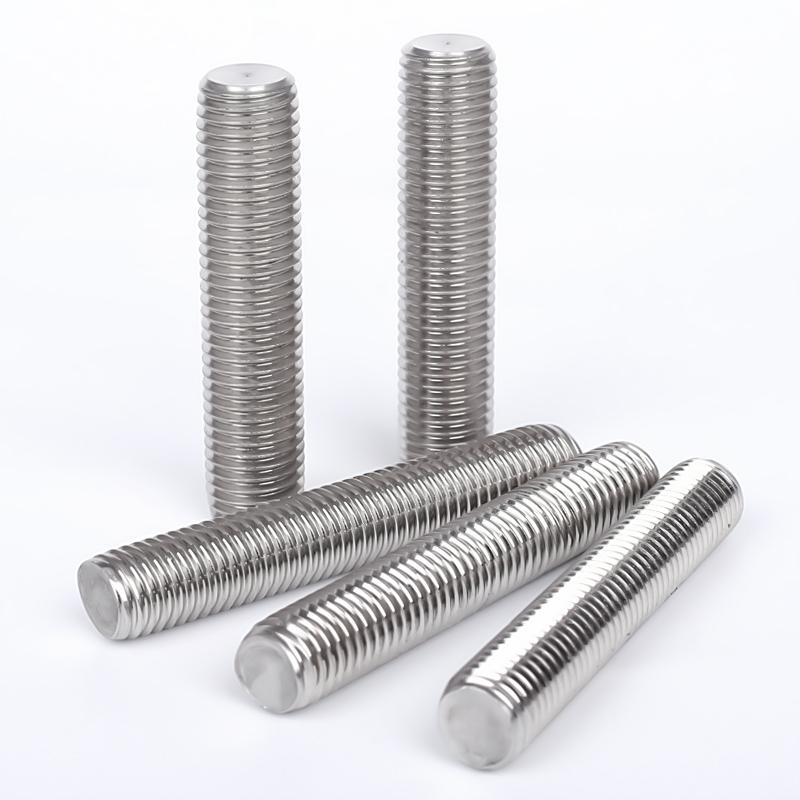
Stainless steel isn't one-size-fits-all when it comes to chemical resistance. The 300 series, particularly 316 and 316L, are the go-to choices for harsh environments because of their molybdenum content. That extra element gives them superior resistance to chlorides, sulfuric acid, and many industrial solvents, which is why you'll see 316 tanks and piping in chemical plants and coastal applications. On the other hand, 304 stainless is cheaper and works fine for mild acids and food processing, but it can pit quickly when exposed to bleach or saltwater.
For more aggressive chemicals, you might need to step outside the typical austenitic grades. Duplex stainless steels like 2205 combine high strength with excellent resistance to stress corrosion cracking, making them valuable in pulp and paper mills or offshore platforms handling concentrated caustics and organic acids. Super austenitic grades such as 904L or 254 SMO push resistance even further against hot sulfuric acid and seawater brines, though they come at a premium cost and can be harder to source.
Don't overlook the ferritic and martensitic families if your exposure is mild or specific. Grade 430 resists nitric acid and many food acids at a lower price point, but it won't survive chlorides. Grade 440C offers good resistance to mild acids and alkalis along with high hardness, which suits valve components and bearings in chemical dosing equipment. The key is matching the exact chemical concentration, temperature, and impurities to a grade's tested limits rather than assuming all stainless steels behave alike.
Why Thread Tolerance Checks Save You from On-Site Rework
Most on-site rework starts with a simple assumption: the threads will fit. That assumption falls apart when a batch of bolts arrives with minor pitch diameter drift or a slightly oversized major diameter. You might not notice it in the shop, but on a ladder or inside a cramped equipment bay, a nut that binds halfway down the stud turns a ten-minute job into an hour of fighting, cleaning, and forcing parts. A quick tolerance check with a go/no-go gauge before packing the toolbox catches those mismatches early, so the only surprises on site are weather-related, not fit-related.
Thread tolerance checks also protect against the “almost fits” trap. A fastener that screws in with resistance might seem acceptable until vibration, thermal cycling, or repeated torque loads cause galling or premature failure. By verifying pitch diameter, thread angle, and lead within specified limits, you avoid sending a crew out with hardware that degrades under real conditions. The cost of a five-minute measurement is nothing compared to returning to the shop for new parts, rescheduling a shutdown, or explaining to a client why a brand-new assembly already needs a helicoil.
What Local Stock and Fast Turnaround Tell You About a Supplier
A supplier with local stock isn't just holding boxes close to your dock—they're carrying the cost of being ready. That says a lot. It means they've looked at order patterns in your area, accepted the expense of warehouse space, and decided that a shorter delivery window is part of their job. For you, that translates into fewer days spent waiting, smaller safety stock in your own facility, and less panic when a customer moves a deadline up.
Quick turnaround points to another layer of discipline. To ship fast and accurately, a supplier needs stock counts that match reality, pick-and-pack steps that don't fall apart under pressure, and a team that treats same-week dispatch as normal, not heroic. If they can do that on an ordinary Tuesday, they can probably handle change orders, partial shipments, and the occasional quality hiccup without going silent.
Put those two signals together and the message is clear: the supplier has built their operation around your timeline, not just their own convenience. You're not paying extra for speed; you're avoiding the hidden costs of waiting.
Custom Rod Modifications That Keep Installation Simple
Most custom rod builds get bogged down with finicky alignment and specialized tooling. The simpler path is to stick with components that slot together without adjustment. Look for reel seats with pre-threaded locking rings and grips that slide over the blank with a snug friction fit. You skip the epoxy mess and the hour spent sanding down high spots. A little dry-fitting before final assembly tells you exactly where everything sits, so there are no surprises when you start wrapping thread.
Guides are another place where installation complexity piles up. Instead of building each one from scratch, use sets with pre-ground feet and color-coded sizing. Tape them in place, check the spine alignment, and only then reach for the finish. If you are swapping out existing hardware, choose replacements with matching inner diameters and thread pitch. That alone cuts the install time in half because you are not fighting the blank or reaming metal to force a fit.
The real trick is leaving room for adjustment. Custom does not have to mean permanent. Use locking collars or set-screw reel seats that can be repositioned without stripping the blank. When a component slides on and locks down by hand, you can test balance on the water and tweak it later. That kind of modular thinking keeps the build approachable, even for someone who has never held a rod wrapper.
Signs of a Supplier Who Will Still Answer Calls After the Invoice
A supplier who still picks up the phone after payment has cleared isn't just polite—they're rare. These are the ones who treat the invoice as a milestone, not a finish line. You'll notice they reference your last order unprompted, ask how the product performed, and offer adjustments without being chased. Their replies come with a tone of continuity, as if the relationship never paused. That consistency is a quiet signal of long-term thinking, not a one-off transaction.
Look for small, specific habits: they remember your preferred contact time, flag a potential delay before you do, or send a brief note a week after delivery with a tip you hadn't considered. These aren't scripted follow-ups; they carry the rhythm of someone who keeps your file open. When a supplier asks a question that shows they've actually thought about your usage scenario, you've found the kind of partner who will answer calls months later—not because they have to, but because they were never really gone.
The contrast is stark in the industry. Most vendors go silent once the wire transfer lands, treating the invoice as the final handshake. A supplier who stays reachable afterward is betting on the next order rather than resting on this one. That post-invoice availability—whether it's a five-minute troubleshooting call or a heads-up about a price shift—tells you they've priced in the long game. And in a market full of disappearing acts, that's the difference between a vendor and a reliable ally.
FAQ
Request mill test reports (MTRs) for each heat number and cross-check the listed grade, such as 304 or 316, with an independent spectrometer test on random samples. A supplier that hesitates to provide traceable documentation often cuts corners on raw material sourcing.
Look for passivation, electropolishing, or coatings like Xylan or PTFE depending on the exposure. The supplier should explain how each finish affects thread fit and torque values instead of just listing them in a brochure.
Tight thread tolerances like 2A/2B ensure consistent engagement with nuts and reduce galling under load. Straightness can be corrected during installation, but oversized or undersized threads lead to immediate assembly failures or premature loosening.
Each bundle or carton should carry a durable tag showing the heat number, grade, size, and production date. Avoid suppliers that ship loose rods in mixed containers, because that makes recalls or quality audits nearly impossible.
Ask for a small prototype run with non-standard thread lengths and tight deadlines. A reliable company will give clear lead times, confirm thread engagement requirements, and provide inspection reports for the custom work instead of steering you back to stock sizes.
Quotes significantly below the market average for the same grade often indicate recycled or non-certified raw material, skipped passivation, or loose thread tolerances. Always compare pricing against the current LME nickel and molybdenum surcharges rather than accepting the lowest number.
Not always. The deciding factor is whether they can provide consistent metallurgy documentation, reliable logistics, and clear communication during quality disputes. Some overseas mills with dedicated export lines outperform local distributors that simply repackage imported stock without inspection.
Conclusion
Checking rod quality before shipment means more than reading a mill certificate. Ask for heat numbers and compare them against actual material composition, especially when the rod must survive acids, chlorides, or washdown chemicals. Not every stainless grade performs the same: 316 holds up where 304 corrodes, and duplex may be warranted for harsher exposure. A supplier who can discuss chemical resistance honestly, without overselling a grade, saves you from premature failures. Thread tolerance is another make-or-break factor. Loose threads cause joint play, and tight threads lead to cross-threading during install. Request a sample or test report showing thread class and pitch diameter, and verify that every lot receives the same check before it leaves the warehouse.
Beyond the material, service signals reliability. Local inventory and short lead times indicate a supplier who understands that downtime costs money. If they stock common diameters and lengths, you avoid waiting for overseas shipments. Custom modifications, such as cut-to-length rods, chamfered ends, or added thread length, keep installation simple and reduce field labor. Pay attention to how the company behaves after the sale: do they return calls, provide traceability documents, and handle complaints without excuses? A supplier that answers technical questions after the invoice is closed is the one you want on your next project. Those small signs separate a transactional vendor from a long-term partner.
Contact Us
Contact Person: Shane
Email: [email protected]
Tel/WhatsApp: 8613357785029
Website: https://www.wanluohardware.com

