Top 10 PVDF PPGI Products for Durable Roofing and Cladding
2026-10-19
Not all PVDF PPGI is built to handle the same punishment. Some fade in three years; others crack at the first deep freeze. To save you the trial-and-error, we ranked the top 10 PVDF PPGI products for durable roofing and cladding, testing adhesion, gloss retention, and corrosion resistance. In that shortlist, LANYUN keeps appearing—not because of marketing, but because its coating consistency holds up on real job sites. Read on to see which products made the cut and where LANYUN fits in the pecking order.
What a 20-Year Warranty Actually Tells You About PVDF PPGI
A 20-year warranty is not just a marketing sticker; it reflects how much stress the PVDF coating is expected to handle. It tells you the manufacturer has tested the finish against prolonged UV exposure, coastal salt spray, and thermal expansion without seeing severe chalking or color drift. That kind of promise usually means the system uses a 70% PVDF resin blend, not a cheaper acrylic mix, and that the primer and pretreatment steps were not skipped to cut corners.
However, the warranty only tells part of the story. Most 20-year guarantees cover film integrity or major color fade beyond a specific Delta E value, but they rarely include gloss retention or edge rust. You should look at what the warranty excludes: cut edges, scratches during roll forming, and installations within certain industrial zones often fall outside coverage. A supplier with a 20-year warranty but weak substrate prep can still deliver steel that fails at bends or fasteners long before the topcoat does.
In practice, that two-decade label is a useful comparison tool. It signals that the coil coater has enough confidence in its line speed, curing temperature, and quality control to stand behind the product. It also hints at a premium price, because the warranty risk is priced into the material. When two suppliers offer the same warranty length, dig into the actual terms and case studies rather than assuming the coverage is identical.
How Coating Thickness Changes Roof Performance in Harsh Sun
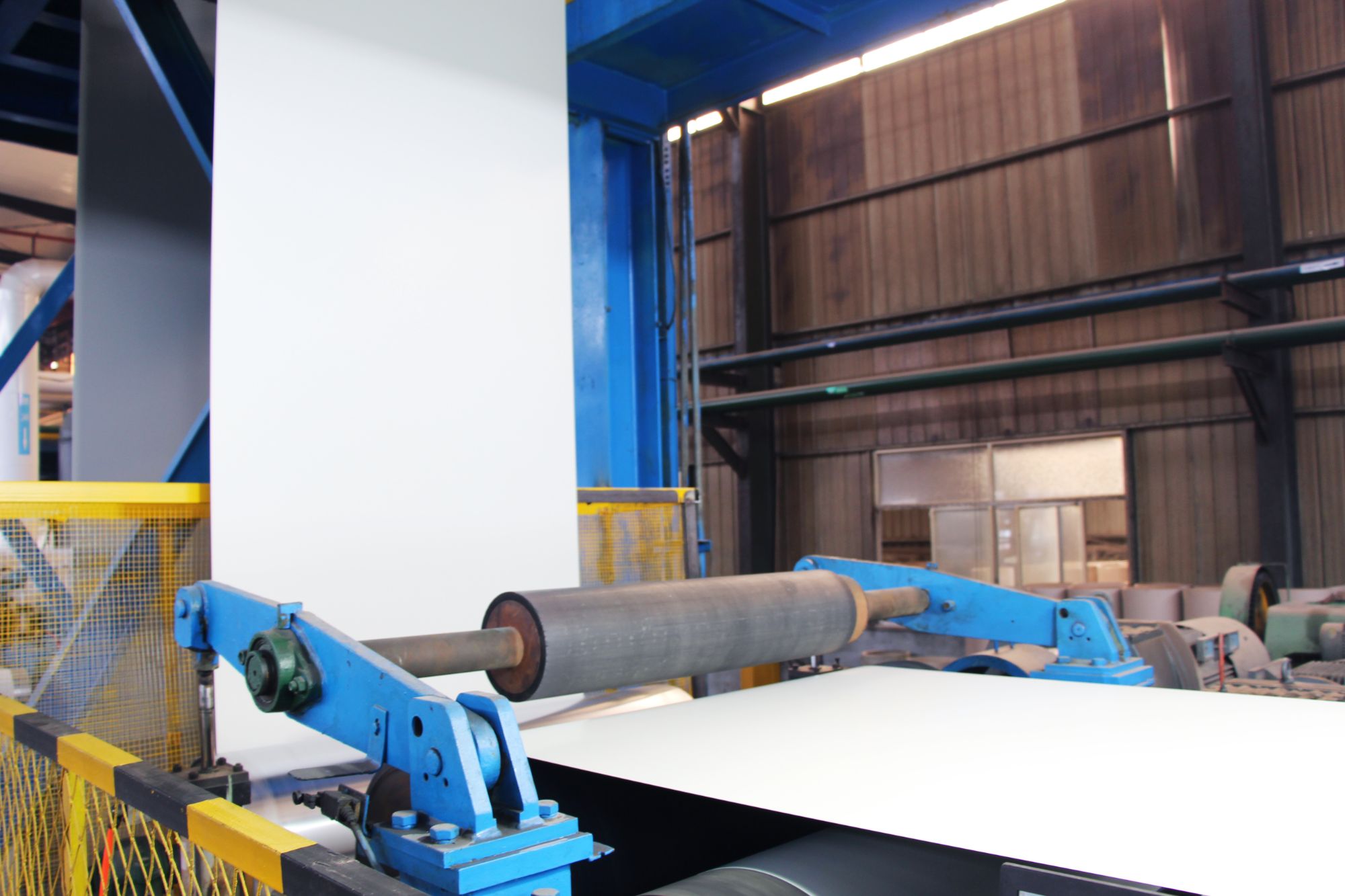
A thinner coating might seem economical, but harsh sun exposure quickly exposes its limits. With less material to absorb and reflect UV energy, the film breaks down faster—chalking, fading, and eventually cracking as the roof expands and contracts through hot afternoons and cool nights.
Going too thick creates a different failure path. The surface may skin over before the lower layers cure, trapping solvent or moisture. Blisters form under midday heat, and the rigid film can't flex with thermal movement. Cracks then open up, giving water a direct route to the substrate.
Most high-quality acrylic coatings perform best when applied within a controlled wet-film range that yields roughly 20 to 30 dry mils. At this thickness, the coating maintains enough elasticity to handle daily movement while still providing reliable UV shielding. Checking wet-film gauges during application and dry-film measurements afterward keeps the finished roof in that protective zone.
The Overlooked Role of Primer Layers in PVDF Adhesion
PVDF coatings are celebrated for their resistance to UV, chemicals, and dirt, but that very inertness creates a stubborn problem: the fluoropolymer surface refuses to bond with most substrates. This is where the primer layer earns its keep, though it rarely gets the attention it deserves. Instead of being a mere tie coat, a well-formulated primer actively promotes adhesion by offering reactive functional groups that can latch onto both the metal oxide layer and the PVDF backside. The result is a mechanical and chemical interlock that prevents the kind of catastrophic delamination seen when primers are skipped or applied too thinly.
Field failures often trace back to primer selection or application rather than to the PVDF topcoat itself. A primer that wets poorly, cures unevenly, or lacks the right acrylic, epoxy, or silane modification will leave weak boundary layers that only show up after years of thermal cycling and moisture exposure. On aluminum panels and galvanized steel coil, primer thickness in the five-to-ten-micron range can make the difference between a coating that survives two decades outdoors and one that peels at the first deep scratch. Ignoring this thin intermediary layer is a reliable way to undermine an otherwise high-performance fluoropolymer finish.
Color Stability Tests That Separate Premium PVDF from Imitators
The real test of a PVDF coating isn't how it looks on day one, but how it holds its color after years of sun, rain, and industrial fallout. Premium PVDF resins are formulated with inorganic pigments that resist fading, while cheaper imitators often blend in organic colorants that break down under UV exposure. In accelerated weathering chambers, top-tier PVDF can go 4,000 hours or more with a Delta E shift of under 3—barely perceptible to the human eye. Imitators may show visible chalkiness or a gray cast within half that time.
A sharp differentiator is the acid resistance test, where a 10% hydrochloric acid solution sits on the coated surface for 15 minutes. Premium PVDF leaves no trace; inferior products often reveal a permanent stain or etched ring. Combined with a boiling water or steam resistance check, these tests expose weak cross-linking and resin dilution that manufacturers hide behind glossy marketing shots.
Field data tells the same story: after a decade on coastal high-rises, premium PVDF panels show less than 5% gloss loss and no visible color drift, while imitators often need repainting within five years. If a supplier can't provide independent QUV and EMMAQUA results, that silence speaks louder than any warranty card.
Field Failures from Wrong Fastener Choices and How to Avoid Them
Most field failures from wrong fastener choices come down to a mismatch that looked fine on paper. A bolt that meets a tensile strength spec can still snap after a few thermal cycles if its coefficient of expansion differs sharply from the clamped material. In outdoor gear, mixing stainless and zinc-plated hardware can cause galvanic corrosion that eats through the plating and leaves a weakened cross-section long before anyone notices visible rust.
Another overlooked issue is thread engagement. Using a fastener with the right diameter but the wrong thread pitch or class of fit may feel tight during assembly, yet the joint loosens under vibration. High-strength bolts torqued into softer tapped holes can also strip internal threads, creating a hidden failure that passes a quick visual check. These problems often surface as fatigue cracks near the first engaged thread, not at the expected load point.
Avoiding such failures requires checking more than size and length. Confirm the strength grade, coating, thread form, and torque range against the actual service conditions. When a substitution is proposed, test the assembled joint under load cycles and temperature swings rather than assuming a generic replacement will hold. Documenting the exact part number and lot for each fastener position also helps trace field issues back to a specific batch, preventing repeat failures.
When Paying More Upfront for PVDF PPGI Saves Money by Year Ten
A PVDF-coated PPGI panel rarely looks like a bargain on the first invoice. The resin system costs more than standard polyester, and that premium can push a project budget uncomfortably high at the start. But the arithmetic flips somewhere around year six or seven. Standard polyester begins to chalk and fade, especially on south-facing roofs or coastal sites. PVDF holds its color and gloss far longer, which means you are not repainting or replacing sheets before the building has even aged a decade.
By year ten, the gap is not just about appearance. Lower maintenance alone often covers the initial difference: no scaffolding, no labor for recoating, no downtime for a tenant or production line. Add in the avoided cost of early panel replacement and the reduced risk of substrate corrosion after coating failure, and the premium starts to look like a deliberate cost-control move rather than an extravagance. Clients who track whole-life costs tend to reorder PVDF once they have paid for a polyester roof twice.
FAQ
PVDF coatings hold their color and gloss far longer because the fluoropolymer resin resists UV degradation, chalking, and fading. On roofs, that means fewer visible changes after years of sun, rain, and industrial fallout, while standard polyester tends to dull and chalk much sooner.
Look beyond the coating name and check the actual film thickness, primer system, and warranty terms. A top product usually pairs a 25–30 µm PVDF topcoat with a corrosion-resistant primer and backs it with a written performance guarantee for color and film integrity, not just a generic datasheet claim.
Yes, but only if the coating system is formulated for tight bending. Premium PVDF PPGI uses a flexible primer and controlled cure so the film stretches with the metal during profiling. If the sheet is over-baked or the primer is too rigid, micro-cracks appear on bends and become rust points.
A soft wash with plain water and a mild, non-abrasive detergent every six to twelve months is enough in most climates. Avoid solvent-based cleaners, stiff brushes, and pressure washing above about 800 psi, because they can erode the topcoat or force water under laps and fasteners.
Lighter colors and lower gloss tend to show salt haze less and stay cooler under direct sun. Many coastal projects choose off-white, beige, or silver with a 25–35 gloss range, not because darker PVDF fails faster, but because the surface stays cleaner-looking and reduces thermal movement between panels.
A hot-dip galvanized or zinc-aluminum substrate with proper pre-treatment is what stops rust from spreading if the coating is scratched. Top-tier PVDF PPGI usually specifies a minimum coating mass like Z275 or AZ150 and a chromate or chrome-free conversion layer so the cut edges and score marks self-heal to a degree.
Ask for QUV or Xenon arc weathering results, pencil hardness, T-bend flexibility, and impact resistance values from the actual coil, not a sample panel. Also confirm the coating thickness at multiple points across the width. Consistent edge-to-edge performance matters more than a single impressive laboratory number.
Fading usually comes from uneven film thickness or insufficient curing during coil coating. If the line speed is too fast or oven zones are not balanced, parts of the coil get less crosslinking. That shows up as blotchy color change after a few years. Properly cured PVDF has a uniform resin network and ages evenly.
Conclusion
Sorting through the top PVDF PPGI options for roofing and cladding often starts with warranty promises, but a 20-year guarantee only tells part of the story. The real difference shows up in how the coating holds up under relentless UV exposure, where thickness becomes the quiet workhorse. Thicker PVDF layers don't just add material; they buy time against chalking and fading in harsh sunlight. Beneath that topcoat, the primer layer does the unglamorous job of locking everything to the steel, and cheap products that skimp here can peel within a few seasons. The best-ranked materials pair a generous PVDF film with a tightly matched primer, because adhesion failures are rarely visible until it's too late.
Color retention is another reality check: premium PVDF sheets hold their pigment through accelerated weathering tests that imitate years of desert sun, while imitators drift toward chalky pastels. Field experience also shows that even the best panel fails when fastened with the wrong screws or washers, causing galvanic corrosion or leaks around penetrations. Smart buyers look past the initial invoice and compare maintenance cycles; a quality PVDF PPGI product often costs less by year ten simply because it avoids repainting and panel replacement. Across the top ten picks, the recurring theme is balance—durable topcoat, compatible primer, controlled film thickness, and installation details that respect the material's limits.
Contact Us
Contact Person: Nia
Email: [email protected]
Tel/WhatsApp: +86 18954360337
Website: https://www.sdppgi.com