
Top Extruder Models Compared: Which One Fits Your Production Line?
2026-11-02
Choosing the right extruder isn't just about horsepower or price—it's about how a machine holds up shift after shift on your specific materials. We've put the leading models head-to-head, skipping the marketing fluff to focus on throughput, maintenance, and flexibility. You might be surprised how often a lesser-known name like SFC outperforms the big brands in real production environments. Read on to see where each model truly fits—and which one deserves a spot on your floor.
Single-Screw or Twin-Screw? That Choice Sets the Tone for Your Entire Line
Walk through any plastics processing plant and you'll hear the same debate simmering between shifts. Single-screw extruders get praised for their straight-talking simplicity and forgiving nature, especially when you're running regrind or a material that's already been through the wringer. They don't demand much, and that's exactly why so many lines start there. But start is the key word. The moment your output needs to climb or you introduce fillers, color concentrates, or anything that actually needs mixing, the single-screw starts showing its limits. You can bolt on a Maddock mixer or play with barrel temperatures all morning, but there's a ceiling you'll keep bumping into.
Twin-screw machines are a different animal entirely. They don't just melt and push—they knead, shear, and rearrange. The intermeshing screws create a controlled chaos that gives you dispersion and distribution you simply can't fake on a single. Temperature control tightens up, residence time drops, and suddenly you're compounding, devolatilizing, or running a heat-sensitive polymer without praying it survives the barrel. The trade-off? You pay for every bit of that capability, both upfront and in maintenance. Screw elements wear, gearboxes demand attention, and the operator who's used to a single-screw's yawn-and-walk-away routine will have a steep learning curve.
So the choice isn't really about which machine is "better" in some abstract sense. It's about what your line will actually see day after day. If you're pushing commodity resins at steady rates and your product tolerances are loose enough to drive a truck through, a single-screw keeps your cost per pound honest. But if the plan includes custom compounds, tricky additives, or venting that actually works, you're not upgrading by bolting on more downstream equipment—you're just delaying the inevitable switch. That initial decision echoes through every downstream station, from pelletizer to packout. Pick wrong and you'll spend the next five years fighting your own extruder. Pick right and the whole line finally breathes.
Throughput Claims Fall Apart When You Look at Torque Curves
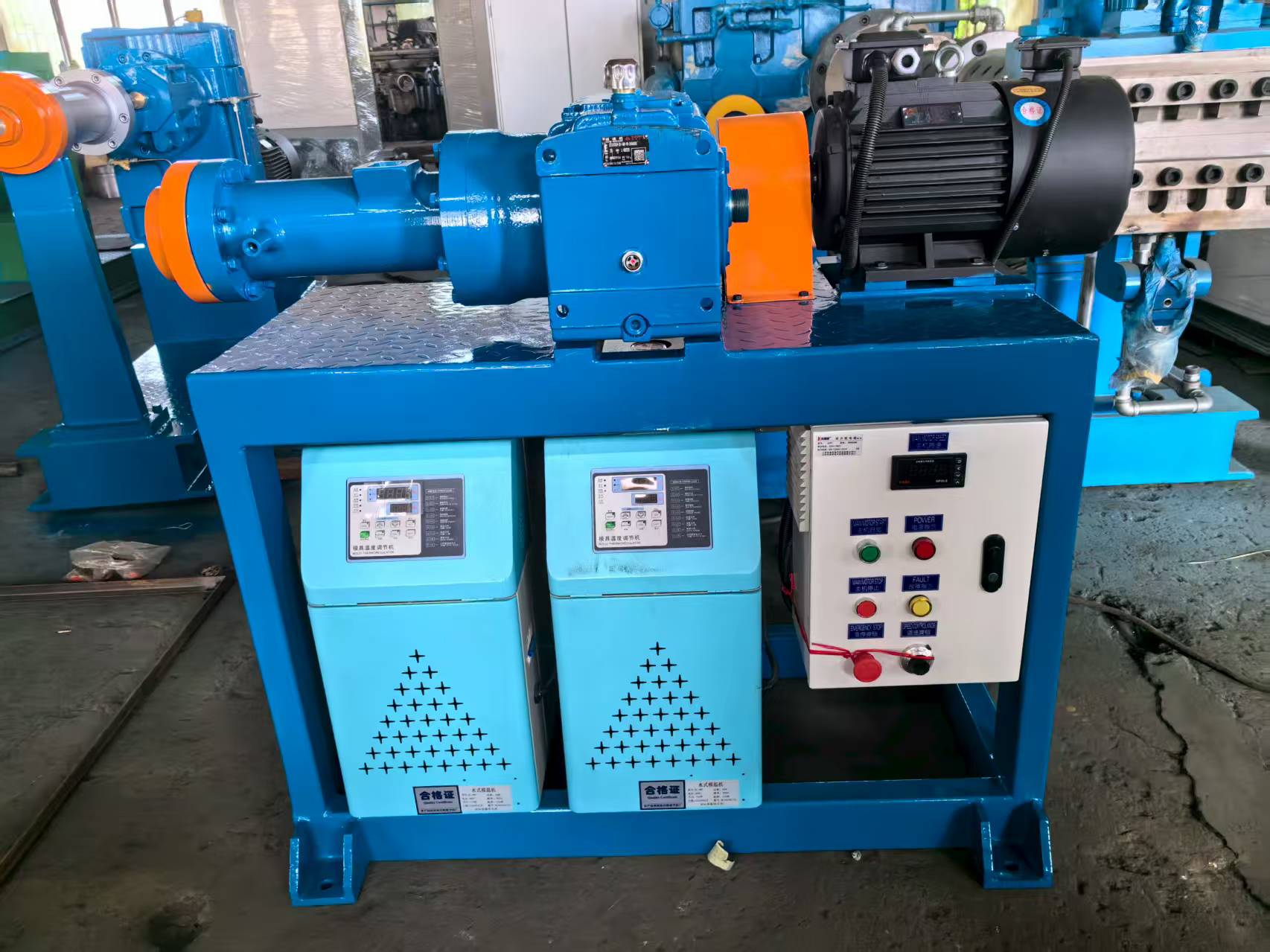
Peak throughput numbers on a spec sheet can look impressive, but they rarely survive contact with an actual torque curve. The headline figure usually comes from a narrow band near the top of the rev range, while the rest of the curve tells a very different story. Once you see how sharply torque drops off on either side of that peak, it becomes clear that the engine is only useful in a small window. That means the driver has to work much harder to keep the motor on boil, and real-world performance suffers compared to the advertised number.
The problem gets worse when you compare two engines with the same claimed output. One might hold strong torque across a wide plateau, while the other spikes briefly and then falls away. The first will feel responsive and flexible in normal driving, pulling cleanly from low revs without constant downshifts. The second will feel flat and lazy unless you chase the tachometer. Looking only at the peak figure hides that difference completely, but the shape of the torque curve exposes it right away.
Even acceleration times can be misleading if the torque curve is ignored. A car with less peak power but a broader, flatter torque band can often outrun a higher-rated rival in real conditions. That is because it spends more time near its useful output during each gear, rather than waiting for the engine to climb back into a narrow sweet spot. When you stop staring at the marketing number and start reading the torque curve, the so-called throughput advantage often disappears.
Your Polymer Today Might Not Be Your Polymer Next Year
Polymers are often treated as fixed ingredients, but in practice their behavior can drift over time due to subtle changes in feedstock, catalyst residuals, or even storage conditions. A resin that processes smoothly today might show unexpected melt flow shifts or surface defects after a supplier adjusts a minor comonomer ratio. These variations rarely show up on a standard datasheet, yet they can quietly alter part dimensions, weld strength, or clarity.
Moisture uptake is another silent variable. Nylon or PET stored in a humid warehouse can absorb enough water to change viscosity during molding, leading to splay or brittleness that wasn't present when the material was first qualified. Even UV exposure on pre-colored pellets can fade pigments or initiate chain scission before the polymer ever reaches the hopper.
The practical takeaway is that polymer performance is a snapshot, not a guarantee. Regular drying, lot-to-lot incoming inspection, and small-scale trial runs before full production help catch these shifts early. Treating each batch as a new material—even when the grade name hasn't changed—avoids the trap of assuming yesterday's polymer will behave identically next year.
Energy Use Rarely Makes It Onto the Spec Sheet—But Your Utility Bill Notices
Look at a typical product page and you will find screen size, processor speed, maybe even the number of ports. What you won't usually see is how many watts the thing pulls while it's actually running, or what it draws when it's supposed to be off. Manufacturers treat energy consumption as an afterthought, often leaving it to a separate datasheet that few buyers ever open.
That missing number has a way of showing up later. A device that costs a few dollars less upfront can consume enough extra electricity over a year to erase the savings, and the only place that becomes obvious is on the monthly bill. People tend to notice a jump after adding a second refrigerator or a bigger monitor, but they rarely connect it back to the purchase they made months earlier.
It doesn't have to be this vague. Even a simple annual kilowatt-hour estimate under typical use would give shoppers a way to compare real costs, not just sticker prices. Until that becomes standard, your utility bill will keep doing the job the spec sheet ignores.
Fitting a New Extruder Into a Floor Plan That Was Already Tight
Squeezing a new extruder into an already cramped production floor isn't about finding empty square footage—it's about rethinking how every inch is used. The first step was walking the line with a tape measure and a skeptical eye, mapping out the true clearance around existing equipment, overhead ductwork, and the path forklifts take when nobody's watching. That reality check exposed a few 'temporary' storage racks that had quietly become permanent, and reclaiming that space opened just enough room for the machine's footprint without forcing a full layout overhaul.
Once the obvious spots were ruled out, the team shifted utilities instead of machines. Relocating a small air compressor and rerouting a chilled-water line along the ceiling created a usable bay near the old granulator, which had been treated as unmovable for years. The extruder slid in with about eighteen inches to spare on the control-panel side—tight, but enough for a technician to kneel and reach the breaker without pulling the whole panel off. That clearance became the hard constraint for every decision afterward.
The trick was treating the floor plan as a living document rather than a fixed snapshot. Wheeled carts replaced a fixed workbench, a roll-up door's dead zone became the new material staging area, and one support column got a bright yellow guard after a close call during rigging. None of these moves were glamorous, but together they let the new extruder start production two weeks ahead of the revised schedule—without knocking down a single wall or losing a day of output on the existing line.
Wear Parts and Unplanned Downtime: The Cost Nobody Puts in the Quote
Every quote for a pump, crusher, or conveyor lists the price of wear parts—liners, seals, bearings—as if those numbers tell the whole story. What never appears on the line item is what happens when those parts fail without warning. A worn impeller doesn't just cost you the replacement; it costs you the hour of production lost while the machine sits cold, the overtime pay for the crew called in on a Saturday, and the expedited freight charge to get the part there by Tuesday.
Unplanned downtime is a tax on optimism. You tell yourself the wear part will last another month, maybe two, because the manual says so under ideal conditions. But your conditions are never ideal—abrasive slurry, temperature swings, operators pushing for output. When that part finally gives out, the ripple effect is brutal: one stalled machine backs up three others, a shipment gets missed, and a customer starts questioning your reliability. The repair itself might be a few hundred dollars; the lost revenue and damaged trust are orders of magnitude higher.
Smart buyers stopped comparing only the sticker price of wear parts years ago. They track mean time between failures on their own equipment, not the manufacturer's brochure. They schedule replacements before the wear curve goes vertical, even if it means swapping a part that still looks passable. It feels wasteful until you do the math: paying for predictable maintenance is always cheaper than paying for a panic. The quote might not include that line, but your budget already does—whether you admit it or not.
FAQ
Single-screw machines handle steady, low-shear extrusion well and cost less, but they struggle with intensive mixing. Twin-screw designs, especially co-rotating ones, bring far better dispersion, venting, and torque for engineering plastics or filled compounds. The trade-off is higher purchase price and more involved maintenance.
Screw diameter sets your output ceiling, while L/D affects residence time and how evenly the melt is plasticized. Heat-sensitive materials favor a shorter barrel to limit degradation; heavily filled or devolatilizing recipes need a longer L/D. Always add 20 to 30 percent headroom to your target kilograms per hour when sizing.
Not always. They give excellent distributive mixing and self-wiping, but shear heating can damage thermally sensitive resins. For rigid PVC or similar materials, counter-rotating twins or even a well-designed single screw may be safer and cheaper. If you mainly need melt and shape, a single-screw line might handle the job with less complexity.
Two machines with the same barrel size can behave completely differently depending on the screw layout. Kneading blocks, reverse elements, and gear-type mixing sections change shear intensity, residence time distribution, and temperature control. Always ask the supplier how they would assemble the screw for your specific formulation instead of judging by the base model alone.
Look past motor nameplate ratings and ask for specific energy consumption in kilowatt-hours per kilogram. Two machines with the same output can differ sharply because of gearbox efficiency, heating and cooling system design, and screw geometry. Request real operating data from existing users rather than relying on brochure figures.
People focus on initial price and ignore the cost of replacing screws and barrels, expected gearbox life, heater accessibility, and cleanup time between product changes. A modular barrel and segmented screw design can cut downtime significantly. Check whether spare parts are stocked locally, because waiting weeks for a replacement kills a production schedule.
Sometimes, but higher speed raises melt temperature and shear, which can degrade heat-sensitive materials or demand much better cooling. The gearbox and screw also wear out faster under sustained high RPM. This approach rarely works for filled or thermally fragile resins, so evaluate the actual rheology of your material before downsizing.
Choose a design with modular barrels, segmented screws, and a wide torque and speed range. Look for easily added vent ports or side feeders if you might later incorporate fillers, recycled content, or new polymers. Twin-screw units generally give more room to adapt, but also confirm that upstream feeding and downstream equipment can be reconfigured without a major rebuild.
Conclusion
Choosing among top extruder models rarely comes down to the headline throughput figure. The single-screw versus twin-screw decision sets the baseline for melt quality, mixing intensity, and how easily you can switch resins later. Buyers often lock onto quoted output rates, but those numbers fall apart when you look at real torque curves—sustained torque at your typical screw speed matters far more than a peak nobody runs. And because your polymer today might not be your polymer next year, a machine tuned to one narrow viscosity range can leave you stuck when a supplier change or new formulation arrives.
Energy use hardly ever makes the spec sheet, yet your utility bill remembers every kilowatt-hour. Two extruders can post similar output with very different kW per kilogram, and that gap compounds over years. Installation catches people too: a bigger drive or longer L/D has to squeeze into a floor plan that was already tight from the start. Then there are wear parts and unplanned downtime—the line items nobody includes in the quote. A cheaper screw and barrel look fine until you account for replacement intervals and lost production. The model that fits is rarely the flashiest one; it's the one that matches your torque demand, space limits, energy reality, and appetite for maintenance surprises.
Contact Us
Contact Person: Chen Zhengwei
Email: [email protected]
Tel/WhatsApp: +86-13963975727
Website: https://www.sfcrubbermachine.com